
Organizations negotiate thousands of contracts every year. Without clear guidance on acceptable terms, fallback positions, and escalation points, negotiations can become inconsistent, slow, and risky.
A contract playbook solves this problem.
A contract playbook defines the standard terms, fallback language, negotiation guidance, and approval thresholds for a specific contract type. It enables negotiators to respond quickly to redlines, maintain consistency across agreements, and protect the organization’s legal and commercial interests.
In modern organizations, contract playbooks have become an essential component of contract lifecycle management (CLM). They help legal teams scale their expertise across the business while empowering contract managers, procurement professionals, and sales teams to negotiate within approved boundaries.
According to research from World Commerce & Contracting, organizations lose an estimated 8–9% of contract value due to poor contract management practices. Standardization tools like contract playbooks help reduce this risk by ensuring negotiators consistently apply approved language and escalation rules.
What Is a Contract Playbook?
A contract playbook is a structured set of guidelines that defines how an organization negotiates and manages specific contract provisions.
A playbook typically includes:
- Standard contract language
- Approved fallback clauses
- Negotiation guidance
- Legal rationale for clauses
- Common counterparty objections
- Escalation thresholds
- Business risk tolerances
The goal is to help negotiators resolve most contract issues independently without requiring legal review for every change.
For highly standardized agreements such as NDAs or vendor contracts, a well-designed playbook can enable 70–80% of contracts to be completed without legal escalation.
Contract Playbook Basics
Here are the basics of a contract playbook.
Contract playbooks are built around contract types
Different agreements carry different legal and commercial risks.
Each major contract type should typically have its own playbook, such as:
- Sales agreements
- Vendor or procurement contracts
- Non-disclosure agreements (NDAs)
- Software license agreements
- Master services agreements (MSAs)
- Lease agreements
Because the provisions and risk tolerance vary across contract types, each playbook provides tailored negotiation guidance for that specific agreement.
Playbooks contain approved terms and conditions.
Playbook language should be created collaboratively between legal, business stakeholders, procurement, and finance.
Legal teams ensure the language protects the organization from risk, while business stakeholders ensure the terms remain commercially workable.
The result is a pre-approved set of contract provisions that negotiators can confidently use.
Playbooks provide exact contract language
One of the most important functions of a playbook is providing precise contract language.
This typically includes:
- Standard clause language
- Pre-approved fallback clauses
- Alternative language for different risk scenarios
Negotiators should be able to insert these clauses verbatim, reducing drafting errors and maintaining consistency across contracts.
Playbooks provide negotiation guidance
Playbooks are not just clause libraries. They also explain how to negotiate those clauses.
Each provision typically includes:
- Plain-language explanation of the clause
- Business rationale for the provision
- Common objections from counterparties
- Suggested responses to redlines
- Acceptable fallback options
This guidance helps negotiators understand why a clause matters, making them more confident in defending the organization’s position.
Playbooks warn about risky counterparty language
Playbooks often include guidance on counterparty clauses that frequently appear during negotiations.
These might include provisions related to:
- Indemnification
- Liability caps
- Intellectual property ownership
- Data protection
- Auto-renewals
- Termination rights
The playbook should clearly indicate whether to:
- Reject the language outright
- Replace it with approved language
- Escalate for review
Playbooks Define Escalation Rules
A well-designed playbook empowers negotiators to resolve most issues independently while clearly identifying situations that require escalation.
For example, escalation may be required when:
- Liability caps exceed defined limits
- Intellectual property ownership is transferred
- Data security obligations exceed company policy
- Non-standard indemnification terms are requested
This ensures that high-risk decisions remain under legal control while routine negotiations move faster.
What a Contract Playbook Looks Like
Traditionally, playbooks are organized as structured tables or spreadsheets, where each row represents a contract provision.
Common playbook columns include:
- Provision name
- Standard clause language
- Explanation of the clause
- Common objections
- Negotiation guidance
- Fallback clauses
- Escalation rules
- Risk classification
- Approval thresholds
An “approved on” date is also essential to ensure negotiators are using the most current version of the language.
How Organizations Create a Contract Playbook
Developing a contract playbook is typically led by the legal department, but successful playbooks incorporate input from multiple stakeholders.
The process typically includes:
1. Gathering cross-functional expertise
Legal, procurement, sales, finance, and contract managers collaborate to identify the organization’s preferred contract positions.
2. Analyzing historical contract negotiations
Organizations review past contracts to identify:
- Frequently negotiated clauses
- Common counterparty objections
- Risk outcomes from past agreements
3. Drafting standard language and fallback options
Legal teams draft standard clauses and fallback language that balance risk protection with commercial flexibility.
4. Aligning on risk tolerance
Executives and business leaders determine acceptable risk levels, which guide escalation thresholds and fallback options.
5. Training negotiators
Organizations train contract managers, procurement teams, and sales staff to understand the playbook and apply it consistently.
6. Updating playbooks regularly
Playbooks should be reviewed periodically to account for:
- Changes in law
- New regulatory requirements
- Emerging business models
- Lessons from recent negotiations
6 Benefits of Using a Contract Playbook
1. Faster Contract Negotiations
Negotiators can respond to redlines quickly using approved language and fallback clauses.
Instead of drafting new language for every negotiation, they rely on pre-approved responses, dramatically reducing negotiation cycles.
2. Reduced Legal Bottlenecks
Legal departments often become overloaded reviewing routine contract edits.
Playbooks allow legal teams to delegate routine negotiations while focusing on complex or high-risk agreements.
In many organizations, this reduces legal review volume by 50–80% for standardized contracts.
3. Consistent Contract Language
Without a playbook, negotiators may introduce inconsistent language across contracts.
Playbooks ensure that all agreements reflect the organization’s preferred legal and commercial positions, reducing long-term risk.
4. Better Alignment Across Teams
Contract negotiations often involve competing priorities between legal, finance, procurement, and sales.
Creating a playbook forces these teams to agree in advance on acceptable contract terms, reducing internal conflict during negotiations.
5. Up-to-Date Legal Language
Playbooks provide a centralized mechanism for updating standard clauses.
When laws change or new risks emerge, organizations can update the playbook and immediately distribute the latest language across the business.
6. Easier Contract Review and Auditing
When contracts use standardized language, it becomes much easier to:
- Audit contract terms
- Analyze contract performance
- Identify risk exposure across agreements
Consistency across contracts improves both legal oversight and data analysis.
The Digital Transformation of Contract Playbooks
Traditionally, contract playbooks were stored in spreadsheets or shared documents. While useful, these formats often become outdated and difficult to manage.
Modern organizations increasingly integrate playbooks directly into contract lifecycle management (CLM) software.
Within a contract management system, contract playbooks can:
- Automatically suggest approved clauses
- Insert fallback language during negotiations
- Guide negotiators through decision rules
- Trigger approval workflows for exceptions
- Ensure everyone uses the latest language
AI-powered contract management software can even analyze redlined documents and recommend playbook responses automatically, dramatically accelerating negotiation cycles.
Bringing Your Contract Playbook to Life with Contract Management Software
A contract playbook becomes far more powerful when embedded directly into your contract management system.
Instead of searching through spreadsheets, negotiators can access approved language inside the contract drafting and negotiation workflow.
With modern contract management software, organizations can:
- Standardize negotiation practices across teams
- Reduce legal review bottlenecks
- Improve contract consistency
- Accelerate contract cycle times
- Reduce legal and financial risk
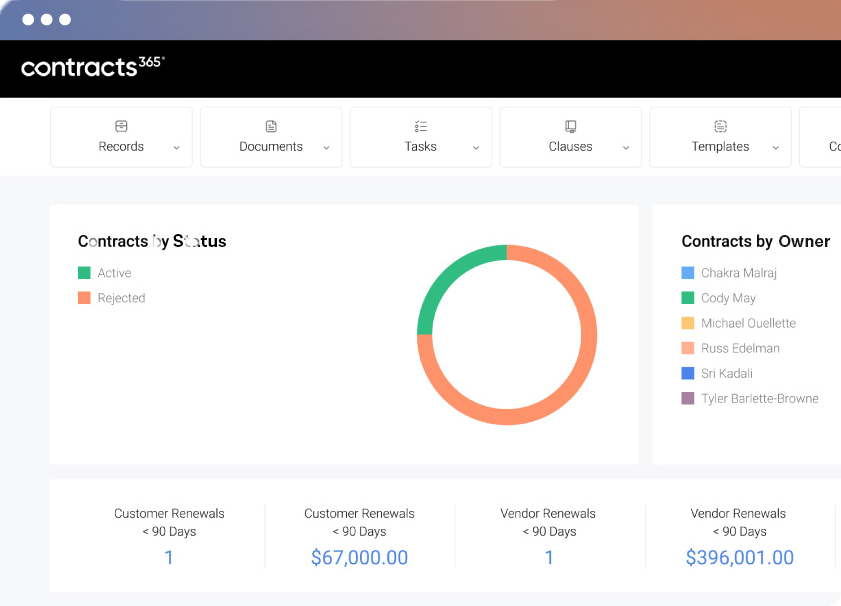
Contracts 365 provides powerful contract management software built for organizations that operate on Microsoft 365.
Our platform integrates contract playbooks directly into the contracting workflow, enabling teams to draft, negotiate, and approve agreements faster while maintaining full legal oversight.
Request a demo to see how Contracts 365 helps organizations scale contract management across the enterprise.
Frequently Asked Questions About Contract Playbooks
What is a contract playbook?
A contract playbook is a structured set of guidelines that defines how an organization negotiates and manages contract terms. It includes standard contract language, fallback clauses, negotiation guidance, and escalation rules so negotiators can respond to redlines consistently while protecting the organization’s legal and business interests.
Who uses a contract playbook?
Contract playbooks are commonly used by legal teams, contract managers, procurement professionals, and sales teams who negotiate agreements. The playbook allows these teams to negotiate within approved boundaries without requiring legal review for every change.
What should be included in a contract playbook?
A contract playbook typically includes standard contract clauses, fallback language, explanations of each provision, common counterparty objections, negotiation guidance, and escalation thresholds. Many playbooks also include risk classifications and approval requirements for non-standard terms.
How does a contract playbook improve contract negotiations?
A contract playbook improves negotiations by giving negotiators pre-approved language and guidance for responding to redlines. This reduces negotiation time, ensures consistent contract terms, and allows legal teams to focus on high-risk or complex agreements instead of routine edits.
How is a contract playbook used in contract management software?
Modern contract management software can embed playbooks directly into the contract drafting and negotiation process. The system can automatically suggest approved clauses, insert fallback language, and trigger approval workflows when negotiators move outside standard terms.