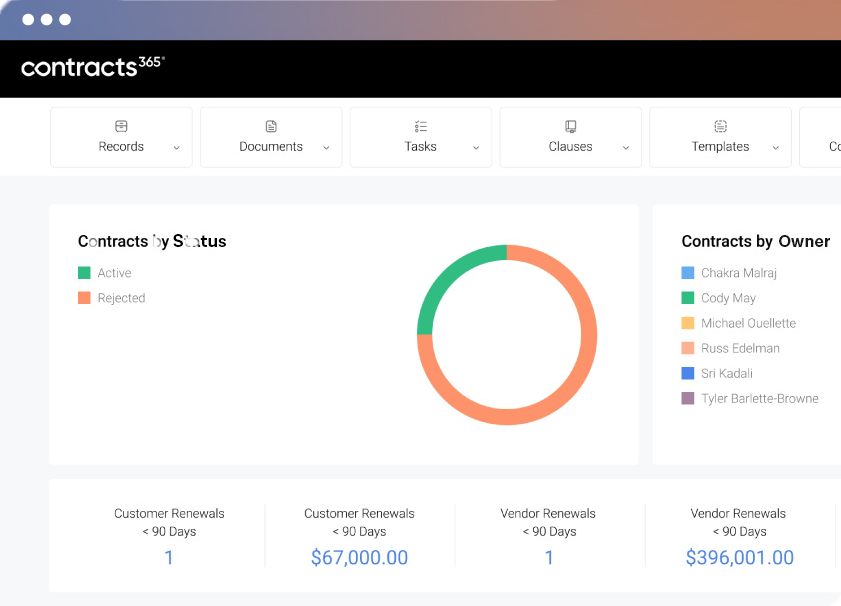
Contract managers are among the most important, and often underappreciated, professionals within modern organizations. They sit at the intersection of legal, procurement, sales, finance, operations, and compliance, helping businesses manage risk, accelerate revenue, improve governance, and maximize the value of commercial relationships.
Today, the role of the contract manager has evolved significantly. Artificial intelligence (AI), automation, and contract lifecycle management (CLM) software have transformed how contracts are created, negotiated, executed, and managed. Rather than spending countless hours tracking documents, chasing approvals, and managing spreadsheets, today's contract managers are increasingly focused on strategic initiatives that improve business outcomes.
Whether supporting customer agreements, vendor contracts, employment agreements, procurement contracts, partnership agreements, or statements of work, contract managers play a critical role throughout the entire contract lifecycle.
This article explores the responsibilities of a modern contract manager, the business value they deliver, and how contract management software helps streamline every stage of the contract lifecycle.
What Does a Contract Manager Do?
A contract manager oversees the creation, negotiation, execution, compliance, renewal, and reporting of contracts throughout their lifecycle.
Common contract manager responsibilities include:
- Managing contract requests and intake processes
- Reviewing and negotiating contract language
- Coordinating legal reviews and approvals
- Managing contract workflows and signatures
- Tracking contractual obligations and compliance requirements
- Monitoring renewals, expirations, and termination rights
- Maintaining templates and clause libraries
- Supporting contract analytics and reporting
- Managing contract lifecycle management software initiatives
While responsibilities vary by industry and organization, the goal remains consistent: helping the business transact efficiently while minimizing risk and ensuring contractual commitments are fulfilled.
How AI Is Changing Contract Management
Artificial intelligence is rapidly reshaping contract management, but it is not replacing contract managers. Instead, AI is helping contract professionals become more strategic by automating repetitive administrative tasks and providing valuable contract insights.
Modern contract management software can now:
- Automatically extract contract metadata
- Identify key dates and obligations
- Generate contract summaries
- Flag non-standard clauses and risks
- Compare agreements against approved playbooks
- Support contract negotiations
- Deliver advanced contract analytics
As a result, contract managers can focus less on administrative work and more on risk management, stakeholder collaboration, compliance, and business performance.
Organizations that combine experienced contract professionals with AI-powered contract management software gain significant advantages in efficiency, visibility, and governance.
Pre-Execution Contract Management Activities
Pre-execution activities encompass all work performed before a contract is fully executed. These responsibilities begin when a contract request is submitted and continue through drafting, negotiation, approvals, and signature collection.
1. Contract Intake and Request Management
Every contract lifecycle begins with a request. Business users across sales, procurement, operations, marketing, human resources, and finance regularly require support for customer contracts, supplier agreements, partnership arrangements, employment contracts, and legal consultations.
Contract managers are responsible for ensuring these requests are properly captured, categorized, and routed through the appropriate review and approval processes.
Business Value
Contract intake serves as the foundation of effective contract lifecycle management. Without a structured process, organizations struggle with inconsistent contracting practices, poor visibility, and increased legal and operational risk.
Impact of Contract Management Software
Modern contract management software provides self-service contract requests, automated workflows, dynamic forms, and real-time visibility into contract status. This improves user adoption, standardizes processes, and accelerates contract execution.
2. Contract Preparation and Review
Once a request is submitted, contract managers oversee contract drafting and review activities. Depending on the type of agreement, this may involve generating contracts from approved templates, reviewing third-party agreements, or coordinating specialized legal reviews.
Contract managers must ensure contractual language aligns with corporate policies, risk tolerance, regulatory requirements, and business objectives.
Business Value
Proper contract review helps reduce legal exposure, improve compliance, and protect organizational interests. Consistent contract language also improves efficiency and reduces negotiation cycles.
Impact of Contract Management Software
Contract management software centralizes templates, clauses, and contract records while supporting automated document generation and version control. This helps ensure consistency and reduces drafting errors.
3. Contract Negotiations
Contract negotiations remain one of the most important responsibilities of a contract manager. Whether negotiating pricing terms, liability provisions, indemnification clauses, service-level agreements, or renewal rights, contract managers help balance risk and commercial objectives.
Successful contract negotiations require strong communication skills, business judgment, and a deep understanding of organizational priorities.
Business Value
Effective negotiations help organizations reduce risk, improve profitability, strengthen relationships, and achieve more favorable commercial outcomes.
Impact of Contract Management Software
Modern CLM software provides version control, redlining capabilities, audit trails, collaboration tools, andAI-assisted negotiation support, creating a more efficient and transparent negotiation process.
4. Collaboration with Legal Counsel
Contract managers frequently work alongside internal and external legal counsel to resolve complex legal issues, assess risk, and negotiate specialized contractual provisions.
They often serve as the bridge between business stakeholders and attorneys by providing business context, recommendations, and supporting documentation.
Business Value
Well-prepared contract managers help legal teams focus on high-value legal analysis, reducing review times and improving overall contracting efficiency.
Impact of Contract Management Software
A centralized contract repository and structured collaboration environment provide legal teams with easier access to contract history, communications, and supporting documents.
5. Stakeholder, Reviewer, and Approver Management
Many stakeholders involved in contract reviews and approvals participate only occasionally. Contract managers help guide these individuals through approval processes, clarify responsibilities, and ensure contracts continue progressing toward execution.
Business Value
Contract managers help prevent bottlenecks, maintain accountability, and ensure transactions move forward efficiently.
Impact of Contract Management Software
Automated workflows, notifications, dashboards, and approval routing improve visibility while reducing administrative effort and delays.
6. Signature Management
A contract has limited value until it is fully executed. Contract managers frequently coordinate electronic signatures, track execution status, and ensure executed agreements are properly stored and accessible.
Business Value
Timely execution ensures agreements become legally enforceable and business activities can proceed without delay.
Impact of Contract Management Software
Electronic signature integrations automate signature collection, provide real-time status updates, and automatically store executed contracts in a centralized repository.
Post-Execution Contract Management Activities
The responsibilities of a contract manager do not end when a contract is signed. In many organizations, the greatest value, and risk, exists after execution.
1. Renewal and End-of-Term Management
Most contracts eventually expire, renew, terminate, or require renegotiation. Contract managers monitor critical dates and ensure stakeholders take appropriate action before important deadlines pass.
Business Value
Effective renewal management helps organizations retain revenue, improve supplier relationships, renegotiate favorable terms, and avoid unintended auto-renewals.
Impact of Contract Management Software
Automated alerts, renewal workflows, and reporting capabilities help ensure critical dates are never missed.
2. Amendments, Addendums, and Change Orders
Business relationships evolve over time. As a result, organizations regularly create amendments, addendums, statements of work, and change orders that modify existing agreements.
Contract managers oversee the creation, approval, execution, and tracking of these supplemental documents.
Business Value
Proper management of contract amendments ensures accurate commercial terms, stronger governance, and reduced operational risk.
Impact of Contract Management Software
CLM software standardizes document creation, automates approval workflows, and maintains relationships between parent contracts and supporting agreements.
3. Compliance and Obligation Management
One of the most strategic responsibilities of a contract manager involves monitoring contractual obligations and ensuring compliance with agreed-upon terms.
These obligations may include service-level agreements, reporting requirements, payment commitments, delivery milestones, regulatory obligations, and performance standards.
Contract managers help identify obligations, assign ownership, monitor performance, and address potential compliance issues before they become significant problems.
Business Value
Strong contract compliance practices reduce financial risk, improve performance, strengthen business relationships, and help organizations capture the full value of their contracts.
Impact of Contract Management Software
Modern contract lifecycle management software can automatically extract obligations, assign tasks, monitor deadlines, and provide reporting that supports proactive compliance management.
Execution-Independent Responsibilities
In addition to managing active contracts, contract managers often support broader contract management initiatives that span the entire contract lifecycle.
1. Contract Management Software Administration
Many organizations rely on contract managers to help configure and administer their contract lifecycle management software.
Responsibilities may include maintaining workflows, managing permissions, supporting reporting requirements, configuring contract types, and helping users adopt the platform.
Business Value
A well-managed contract management system improves efficiency, standardization, compliance, and visibility across the organization.
2. Template and Clause Management
Contract managers frequently maintain approved contract templates, clause libraries, fallback language, and negotiation playbooks.
These resources provide consistency and help ensure contracts align with organizational policies and risk standards.
Business Value
Standardized templates accelerate contracting while reducing legal and operational risk.
Impact of Contract Management Software
Contract management software centralizes templates and clauses while supporting automated document generation and governance controls.
3. Collaboration with IT and Business Systems Teams
Contract managers regularly collaborate with IT teams to support integrations, reporting requirements, security controls, workflow automation, and system enhancements.
As contract management software becomes increasingly integrated with platforms such as Microsoft 365, CRM systems, ERP solutions, and AI technologies, this partnership continues to grow in importance.
Business Value
Strong collaboration between contract management and IT teams helps organizations maximize the value of their contract technology investments.
Frequently Asked Questions About Contract Managers
What skills are required to be a successful contract manager?
Successful contract managers combine legal awareness, business acumen, negotiation expertise, communication skills, attention to detail, risk management capabilities, and technology proficiency.
How does contract management software help contract managers?
Contract management software automates administrative tasks, centralizes contract data, streamlines approvals, manages obligations, tracks renewals, and improves visibility across the contract lifecycle.
Can AI replace contract managers?
No. AI helps automate repetitive tasks and provide contract insights, but contract managers remain responsible for business judgment, stakeholder management, negotiation strategy, compliance oversight, and risk management.
What is the difference between a contract administrator and a contract manager?
Contract administrators typically focus on contract processing and administrative activities, while contract managers often assume broader responsibilities that include negotiations, compliance management, risk mitigation, and strategic oversight.
Modern Contract Management Starts with the Right Technology
Today's contract managers are expected to do more than ever before. They must accelerate contracting, improve compliance, reduce risk, manage obligations, oversee renewals, and provide greater visibility into contract performance.
To meet these expectations, organizations increasingly rely on contract lifecycle management software to automate processes and centralize contract information.
Contracts 365 is a leading contract management software solution built specifically for Microsoft 365. From contract requests and AI-powered metadata extraction to approvals, negotiations, obligation management, renewals, reporting, and compliance, Contracts 365 helps organizations streamline every stage of the contract lifecycle.
If your organization depends on contracts to drive revenue, manage suppliers, support partnerships, or maintain compliance, Contracts 365 can help modernize your contract management processes.
Request a personalized demo today and discover how Contracts 365 helps contract managers work faster, smarter, and more strategically.