
Contract negotiation is often the most time-intensive and inconsistent stage of the contract lifecycle. Redlines go back and forth. Versions multiply. Risk hides inside subtle language changes. And the pressure to move faster never stops.
AI is beginning to change that—but only when it’s applied in a practical, governed way.
For many legal and contract teams, the goal isn’t experimental AI. It’s about reducing manual work, improving consistency, and keeping negotiations aligned with approved standards.
What is AI Contract Negotiation?
AI contract negotiation is the use of artificial intelligence to help legal and contract teams review redlines, compare clauses, identify deviations, and suggest approved fallback language during negotiations.
At a Glance: How AI Improves Contract Negotiation
- Speeds up redline review with automated clause comparison
- Ensures consistency across negotiators
- Flags deviations and risk in real time
- Tracks negotiation data for insights and reporting
- Extracts obligations after signature
- Works directly inside Microsoft Word and Microsoft 365
AI Contract Negotiation vs. Traditional Negotiation
7 Practical Ways AI Can Streamline Contract Negotiations
1. Turn Manual Redline Review into Structured Clause Comparison
One of the most time-consuming parts of negotiation is comparing counterparty language to your approved standards.
Instead of reviewing changes line-by-line, AI can compare contract language to your clause library in real time. Deviations from approved language are flagged. Fallback options are surfaced. Reviewers see contextual suggestions directly inside Microsoft Word.
The result is faster, more consistent review—while keeping legal judgment firmly in control.
2. Use AI as an Assistant, Not a Decision-Maker
Legal teams want efficiency. They do not want a black box.
Modern AI negotiation tools are designed to assist reviewers, not replace them. Suggestions are transparent. Recommendations are tied back to defined standards. Reviewers can accept, modify, or reject proposed language.
AI supports the negotiation. It does not control it.
See AI Contract Negotiation in Action
Watch how AI compares contract language, flags risk, and suggests approved edits directly inside Microsoft Word.
- Identify deviations instantly
- Get AI-driven redline suggestions
- Apply negotiation strategy in real time
See a short video demo of AI Negotiation in action →
3. Maintain Consistency Across Negotiators
In many organizations, negotiation style varies widely across individuals. Over time, that can lead to inconsistent language and unnecessary risk.
AI helps maintain alignment by referencing approved clauses, fallback language, and defined negotiation guidance. Some software systems allow organizations to define negotiation posture—balanced, aggressive, or neutral—so recommendations reflect organizational intent.
This ensures standards are applied consistently, even as workloads increase.
4. Capture and Track Deviations Automatically
Negotiations generate data. But without structure, that data is difficult to use.
When deviations from standard language are logged and categorized, organizations can begin to see patterns:
- Which clauses are most frequently negotiated
- Where risk concessions tend to occur
- How negotiation cycles vary by contract type
This visibility helps legal teams refine playbooks and improve standards over time.
AI doesn’t just speed up individual negotiations—it creates intelligence across the contract portfolio.
Download the AI Contract Negotiation eBook
Get a deeper look at how leading organizations are using AI to reduce risk and accelerate contract negotiations.
Download E-Book: AI Contract Negotiation
Download eBook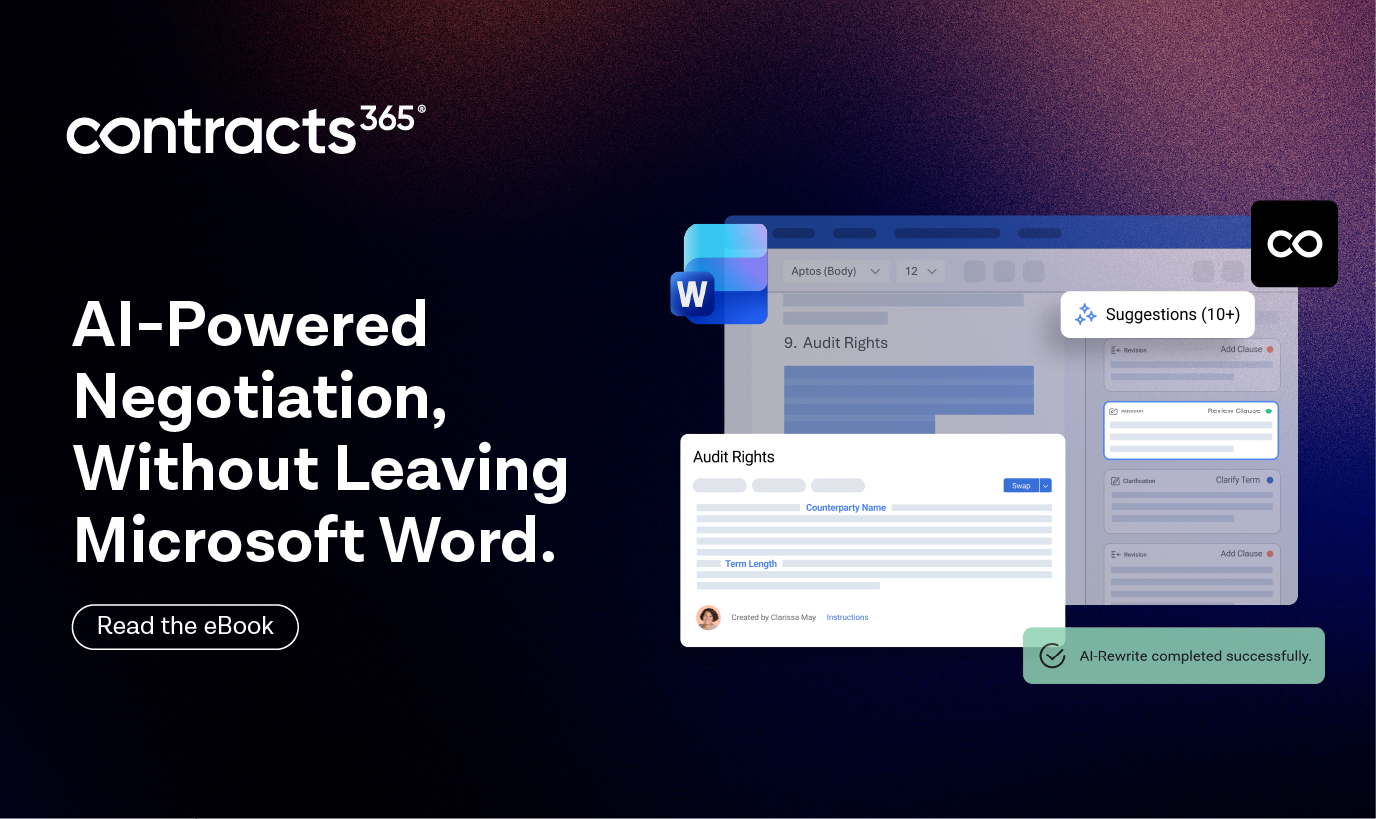
5. Bring Structure to Multi-Round Negotiations
Enterprise negotiations rarely conclude in a single draft. Tracking what changed between versions can become confusing and time-consuming.
AI-assisted version comparison highlights material changes between drafts and surfaces newly introduced risks. Structured version tracking keeps negotiations organized and auditable, even across multiple rounds.
6. Automatically Extract Obligations After Signature
Negotiation does not end when the contract is signed. In many cases, the real risk begins afterward.
AI can extract key obligations such as:
- Renewal terms
- Payment schedules
- Insurance requirements
- Reporting commitments
- Service level agreements
When these obligations are captured and assigned within a contract management software system, organizations reduce missed deadlines and compliance gaps.
Negotiation and post-signature governance become connected—not separate processes.
7. Embed AI Within the Tools Teams Already Use
Adoption matters. AI works best when it appears inside familiar workflows—such as Microsoft Word and Microsoft 365 environments—rather than as a separate application.
When negotiation assistance is embedded within the contract management software:
- Users stay within a secure, governed environment
- Version control and reporting remain intact
- Data stays aligned with enterprise security controls
- Training requirements are minimized
AI becomes a natural extension of contract management—not another disconnected tool.
A Practical Example: Contracts 365 AI Negotiation Companion
The Contracts 365 AI Negotiation Companion was designed to work within Microsoft environments.
Unlike standalone AI tools, the AI Negotiation Companion operates entirely within Microsoft Word and inside your Microsoft 365 tenant—ensuring security, governance, and seamless adoption.
It supports:
- Clause comparison against approved standards
- AI-guided suggestion cards
- Deviation tracking and reporting
- Structured version history
- Automatic obligation extraction
All while preserving full governance, traceability, and enterprise security controls.
The goal is simple: make negotiations faster and more consistent—without sacrificing oversight.
The Future of AI in Contract Negotiation
The conversation around AI in contract management is evolving. Early experimentation focused on automation. The next phase is about applying AI in ways that are practical, transparent, and governed.
For most organizations, the opportunity isn’t replacing legal judgment. It’s reducing manual friction, improving visibility, and strengthening compliance.
AI delivers the most value when it supports how teams already work—and operates within defined standards and enterprise controls.
See It for Yourself
If you’re evaluating how AI can improve contract negotiation:
-
Download the AI Negotiation Companion eBook →
-
Watch the short video demo to see it in action →
Contracts 365: Microsoft-First Contract Management Software
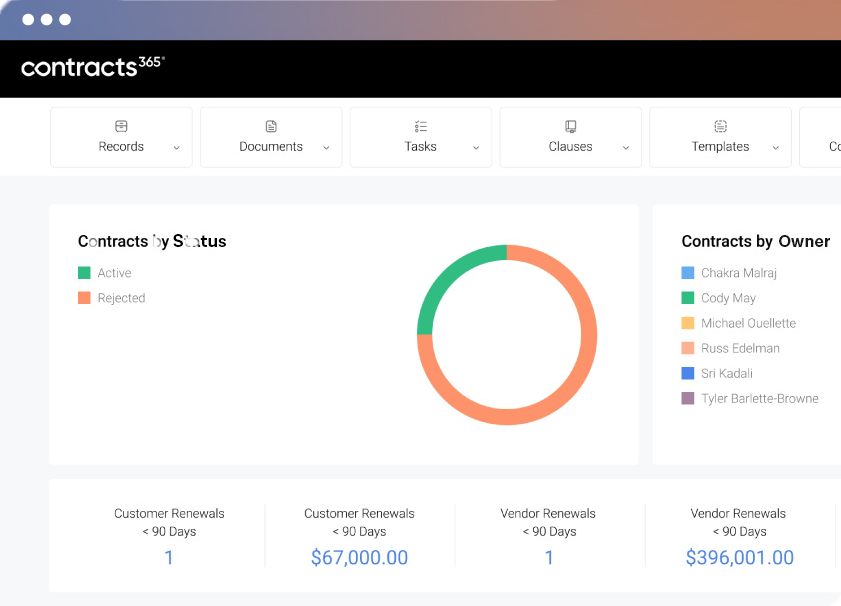
Contracts 365 is designed for organizations that run on Microsoft 365, combining AI-driven contract management with the tools teams already use every day. From clause comparison and negotiation support to obligation tracking and reporting, the platform helps reduce manual work while improving consistency and compliance. Built to integrate with Microsoft 365 and CRM systems like Microsoft Dynamics 365, Contracts 365 enables faster, more controlled contract processes across the enterprise.
Request a demo to see how it works in real time →
Frequently Asked Questions:
AI Contract Negotiation
What is AI contract negotiation?
AI contract negotiation uses artificial intelligence to assist with reviewing, comparing, and improving contract language during negotiations. It can identify deviations from approved clauses, suggest alternative language, and highlight potential risks—helping teams move faster while maintaining control.
How does AI improve contract negotiation?
AI improves contract negotiation by reducing manual review time, increasing consistency across negotiators, and providing real-time insights into risk and deviations. It can also track changes across versions and extract key obligations after signature, creating better visibility across the contract lifecycle.
Does AI replace legal teams in contract negotiation?
No. AI is designed to support legal and contract professionals—not replace them. It provides recommendations and insights, but reviewers remain in control of all decisions, ensuring governance and compliance are maintained.
Can AI work inside Microsoft Word for contract negotiation?
Yes. Some AI contract negotiation solutions are embedded directly within Microsoft Word, allowing users to review, compare, and edit contracts without leaving their existing workflow. This improves adoption and keeps negotiations within a secure, governed environment.
What are the biggest challenges AI solves in contract negotiation?
AI helps address several common challenges, including:
- Time-consuming redline reviews
- Inconsistent contract language
- Limited visibility into negotiation risk
- Difficulty tracking changes across versions
- Missed obligations after contract execution
How does AI help with contract risk management?
AI identifies deviations from approved language and flags potential risks during negotiation. It can also track where concessions are made and extract key obligations, helping organizations monitor compliance and reduce exposure after contracts are signed.
What should organizations look for in AI contract negotiation software?
Organizations should look for solutions that:
- Align with approved clause libraries and playbooks
- Provide transparent, explainable recommendations
- Integrate with existing systems like Microsoft 365 and CRM platforms such as Microsoft Dynamics 365
- Support governance, security, and auditability
- Are easy for business users to adopt
What is the Contracts 365 AI Contract Negotiation Companion?
The Contracts 365 AI Negotiation Companion is part of the Contracts 365 contract lifecycle management platform. It is built for Microsoft 365 environments and supports contract negotiation directly inside Microsoft Word. Key capabilities include clause comparison, AI-guided negotiation suggestions, deviation tracking, structured version history, and obligation extraction.