Why Agreements Disappear Without Structured Contract Lifecycle Management
Every sales team has experienced it. A contract is signed, the deal moves forward, and everyone shifts focus to the next priority. The email thread fades into the archive. The PDF is saved in SharePoint, attached to a CRM record, or stored in a shared drive.
On the surface, everything seems fine.
Then, months later, someone asks a simple question:
When does this contract renew? Did we negotiate a 90-day notice period? What payment terms did we ultimately agree to?
No one is quite sure.
The contract itself may not be lost. It may live safely within SharePoint or another repository. But the information inside it, the dates, obligations, commitments, and negotiated terms that drive business decisions, is not structured or surfaced in a way that makes it easy to act upon.
Without a structured contract lifecycle management (CLM) system, agreements often disappear into what many organizations describe as the "Contract Black Hole."
That's where the real risk begins.
How Contracts Fall Into the Contract Black Hole After Signature
The issue is rarely carelessness. More often, it is the natural byproduct of process.
In many organizations, contracts follow a familiar path. They are drafted in Word, negotiated through email, signed electronically, and saved to a repository. Once execution is complete, attention shifts to customer onboarding, supplier management, revenue recognition, or operational delivery.
What often does not happen is a disciplined process to ensure the final negotiated terms are captured as structured contract data and aligned with downstream business processes.
Renewal dates remain buried in PDFs. Notice periods are not reflected in automated alerts. Payment terms and negotiated exceptions are not consistently updated in system records. Teams rely on spreadsheets, calendar reminders, or individual memory to bridge the gap.
Over time, these workarounds create inconsistency, inefficiency, and risk.
The contract has not disappeared. Its operational value has.
Why Contract Storage Does Not Equal Contract Visibility
Many Microsoft-first organizations assume they are adequately covered because contracts are stored in SharePoint.
SharePoint provides secure document management, collaboration, and governance capabilities that are essential to modern business operations. However, document storage alone does not create contract visibility.
Without structured metadata (effective dates, expiration terms, counterparty information, renewal provisions, obligations, and key business terms) contracts become difficult to search, report on, and govern.
Organizations may have access to the document itself, but not to the intelligence within it.
When contract data is not structured, it cannot reliably power alerts, workflows, reporting, compliance monitoring, or AI-driven insights. As a result, business users often make decisions based on assumptions rather than verified contract information.
That is how agreements fall into the Contract Black Hole. They are stored, but they are not operational.
Why Contract Storage Is Not Contract Management
Many organizations mistakenly believe that storing contracts in SharePoint, a CRM platform, or a shared drive constitutes contract management.
In reality, storage is only one component of an effective contract management system.
True contract lifecycle management requires organizations to capture and maintain structured contract metadata throughout the lifecycle of the agreement. This includes automating renewal tracking, monitoring obligations, managing approvals, maintaining compliance, and providing real-time visibility into contractual commitments.
Without these capabilities, organizations struggle to answer critical business questions, monitor risk, and maximize the value of their agreements.
The result is often missed opportunities, avoidable costs, and increased operational exposure.
The Business Risks of Poor Contract Management
The impact of poor contract management tends to surface gradually.
Renewal opportunities are missed because notice periods were never tracked. Finance teams rely on outdated payment terms. Procurement struggles to validate negotiated supplier obligations. Legal teams spend valuable time searching for contracts and reviewing agreements that should already be visible within the system.
Even small discrepancies can create significant consequences.
A renewal clause added late in negotiation, a revised payment schedule, or an updated liability limitation may never be reflected in downstream systems if there is no structured post-signature review process.
The result is a growing gap between what was signed and what the organization believes was signed.
Over time, that gap erodes trust in contract data and reduces confidence in business decision-making.
Moving from a Contract Repository to Contract Lifecycle Management
Escaping the Contract Black Hole is not about improving filing discipline.
It requires moving beyond document storage and adopting structured contract lifecycle management.
When contracts are managed within a governed framework, key terms are captured as searchable metadata. Renewal dates trigger alerts automatically. Obligations are tracked throughout the contract lifecycle. Negotiated changes are reflected across systems. Reporting becomes more accurate because it is based on structured contract data rather than assumptions.
This allows contracts to function as operational assets rather than static files.
Modern contract management software helps organizations transform agreements into strategic business resources. By combining secure document storage with workflow automation, metadata management, reporting, and AI-powered insights, businesses gain greater visibility into obligations, renewals, compliance requirements, and risk.
For organizations that depend on contracts to drive revenue, manage risk, and ensure compliance, that distinction is not academic.
It directly impacts business performance.
Ready to Escape the Contract Black Hole?
Contracts should not disappear after signature.
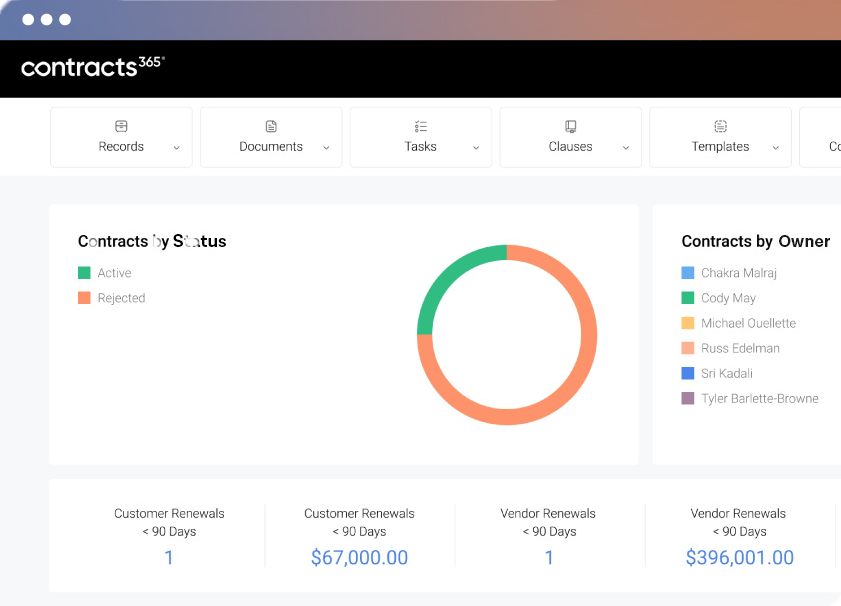
Contracts 365 helps organizations manage the entire contract lifecycle within Microsoft 365, transforming agreements into searchable, reportable, and actionable business assets.
With automated metadata extraction, renewal alerts, obligation tracking, workflow automation, and AI-powered contract intelligence, organizations gain complete visibility into every agreement from creation through renewal.
Schedule a demo to see how Contracts 365 can help your organization eliminate the Contract Black Hole and unlock the full value of your contracts.
Frequently Asked Questions
What is the Contract Black Hole?
The Contract Black Hole refers to the period after a contract is signed when important contractual information becomes difficult to access, track, or manage. While the contract document may be stored in a repository such as SharePoint, key terms, obligations, renewal dates, and notice periods often remain buried within the document and are not surfaced as actionable data.
Why is storing contracts in SharePoint not enough?
SharePoint provides secure document storage and collaboration capabilities, but it does not automatically extract and manage contract metadata. Without structured contract data, organizations may struggle to track renewals, obligations, compliance requirements, and key business terms.
What is contract lifecycle management?
Contract lifecycle management (CLM) is the process of managing contracts from creation and negotiation through execution, storage, compliance, renewals, and expiration. CLM systems help organizations capture contract data, automate workflows, track obligations, and improve visibility into contractual commitments.
What risks arise when contract data is not structured?
When contract data is not captured as structured metadata, organizations may miss renewal deadlines, overlook notice periods, fail to monitor obligations, and make decisions based on incomplete information. These gaps can increase operational, financial, and compliance risks.
How does contract management software help prevent missed renewals?
Contract management software captures key contract dates and terms as structured metadata, allowing organizations to automate alerts, workflows, and reporting. This helps ensure renewal deadlines, notice periods, and other critical milestones are tracked and acted upon in a timely manner.